Same Empire, New Packaging: The Indo-Pacific 'Pivot' and the Art of Imperial Rebranding
Somewhere in a Pentagon conference room, circa 2011, a very serious person looked at a map, circled the Pacific Ocean with a red marker, and announced that America had discovered Asia. Applause, presumably, followed. PowerPoint slides were advanced. A new era of American grand strategy was born — or, more accurately, an old era got a LinkedIn profile makeover and called itself a thought leader.
The 'pivot to Asia,' later rebranded as the 'rebalance to Asia,' and now operating under the even grander marquee of the 'Indo-Pacific Strategy,' is Washington's signature geopolitical product launch of the last fifteen years. It has been praised as visionary, condemned as provocative, and — if you squint at it long enough — recognized as remarkably, almost impressively, familiar.
New Name, Same Playbook
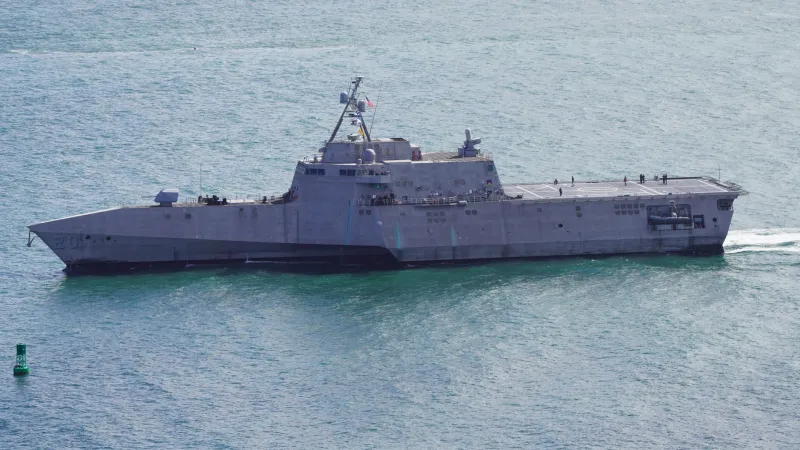
Let's do a quick inventory of what the Indo-Pacific Strategy actually involves: military alliances with regional partners, forward-deployed troops and naval assets, economic frameworks designed to bind smaller nations to American preferences, and a clearly identified rival power to be contained. If that sounds like something you've read before, it's because you have — in every foreign policy document produced between 1947 and 1991. The Cold War called. It wants its architecture back.
The genius of the rebranding, and it genuinely is a kind of genius, is how thoroughly the packaging has been updated while the product inside remains shelf-stable. 'Containment' was a word that carried uncomfortable historical baggage — images of proxy wars, coups, and client states propped up with American cash and occasionally American napalm. 'The Indo-Pacific Framework for Prosperity,' on the other hand, sounds like something you'd find at a Davos breakout session, right between the panel on impact investing and the one about stakeholder capitalism.
China, naturally, plays the role previously occupied by the Soviet Union, though Beijing's casting directors would strenuously object to the comparison. And they have a point: China is simultaneously America's largest trading partner and its designated strategic adversary, which is a level of geopolitical cognitive dissonance that would have made George Kennan's head spin.
The Alliance Shuffle
No imperial rebranding is complete without a robust alliance portfolio, and Washington has not disappointed. AUKUS — the security pact between the US, UK, and Australia — arrived in 2021 with the energy of a product launch, complete with a surprise announcement that torpedoed France's submarine deal with Australia and temporarily set the Atlantic alliance on fire. Nothing says 'new era of multilateralism' like blindsiding your oldest ally to sell some nuclear-powered submarines.
Then there's the Quad — the Quadrilateral Security Dialogue linking the US, Japan, India, and Australia — which has been described variously as an 'Asian NATO,' a 'democratic coalition,' and, by people who've been paying attention, as a naval encirclement strategy with a very good PR department. The Quad holds summits. It issues statements about a 'free and open Indo-Pacific.' It has, at various points, distributed COVID vaccines, discussed climate change, and coordinated maritime surveillance. It is, in short, a containment architecture that has learned to speak the language of global citizenship.
This is not an accident. The lesson absorbed from the post-Iraq, post-Afghanistan era is that hard power needs soft framing. Every military basing agreement now comes wrapped in the language of 'partnerships.' Every joint exercise is framed as 'capacity building.' Every diplomatic pressure campaign is packaged as 'upholding the rules-based international order' — a phrase that conveniently implies that the country with the world's largest military budget is also its most diligent hall monitor.
The China Problem Nobody Wants to Solve
Here is the uncomfortable truth lurking beneath the strategic documents and think-tank white papers: nobody in Washington actually wants a clean break with China, because the American economy is threaded through with Chinese manufacturing, Chinese rare earth minerals, and Chinese demand for US Treasury bonds. The 'decoupling' that hawks have been demanding for years has proceeded at roughly the pace of a glacier — which is to say, it is technically moving but you would not want to bet your afternoon on it.
So the Indo-Pacific Strategy has to perform a remarkable balancing act: project enough military credibility to reassure allies and deter Chinese assertiveness, without actually triggering the kind of conflict that would detonate the global economy. It must be tough enough to satisfy the defense contractors and the congressional China hawks, while remaining vague enough to preserve the trade relationships that keep American consumers supplied with affordable electronics.
This is, to give credit where it's due, a genuinely difficult needle to thread. The empire has always had to manage the tension between its ideological posture and its material interests. It's just that in the Indo-Pacific era, that tension has become so visible, so structurally embedded, that the whole strategy sometimes resembles a man trying to arm-wrestle someone he owes money to.
The View From the Pivot's Other End
It is worth pausing, briefly, to consider how the pivot looks from the countries being pivoted toward. For smaller Southeast Asian nations — Vietnam, the Philippines, Indonesia, Thailand — the US strategic reorientation presents a familiar dilemma: the benefits of American security guarantees versus the costs of being caught between two large, insistent powers. Many of these countries have spent considerable diplomatic energy trying to avoid choosing sides, a posture that Washington finds maddening and Beijing finds equally irritating, which suggests it may be the correct approach.
The Philippines, which hosts significant American military presence under the Enhanced Defense Cooperation Agreement, has oscillated so dramatically in its relationship with both Washington and Beijing that its foreign policy could be charitably described as 'dynamic' and less charitably described as 'whiplash.' This is not entirely Manila's fault. When the world's largest economy and its primary strategic challenger both want your archipelago, your options for principled neutrality are somewhat limited.
Fresh Paint, Original Structure
In the end, the Indo-Pacific Strategy is neither the revolutionary reimagining its proponents claim nor the simple Cold War rerun its critics suggest. It is something more mundane and more durable: an empire adapting its methods to new circumstances while preserving its fundamental objectives. The objectives — primacy, access, the ability to shape regional orders in ways favorable to American interests — have not changed since Kennan was writing his long telegrams.
What has changed is the vocabulary, the multilateral wrapping, and the genuine complexity introduced by economic interdependence with the rival being contained. These are not trivial differences. But they are differences of style rather than substance, of presentation rather than purpose.
Somewhere in that Pentagon conference room, the red marker has moved on to new maps. The PowerPoints have been updated. The strategy has been refreshed, rebalanced, and relaunched. The empire, as empires do, has found a way to keep doing what it was always doing while making it sound like something entirely new.
Another day, another pivot. The view from the edge of hegemony is nothing if not consistent.