Congratulations on Your New Democracy! (Please Ignore the Junta)
The United States government would like to congratulate you on your nation's recent liberation. Your old leader — the one who was getting uncomfortably cozy with Moscow, or Havana, or Beijing, or whoever we're mad at this decade — has been removed. A new chapter begins. Freedom is in the air. Also possibly tear gas, but let's stay positive.
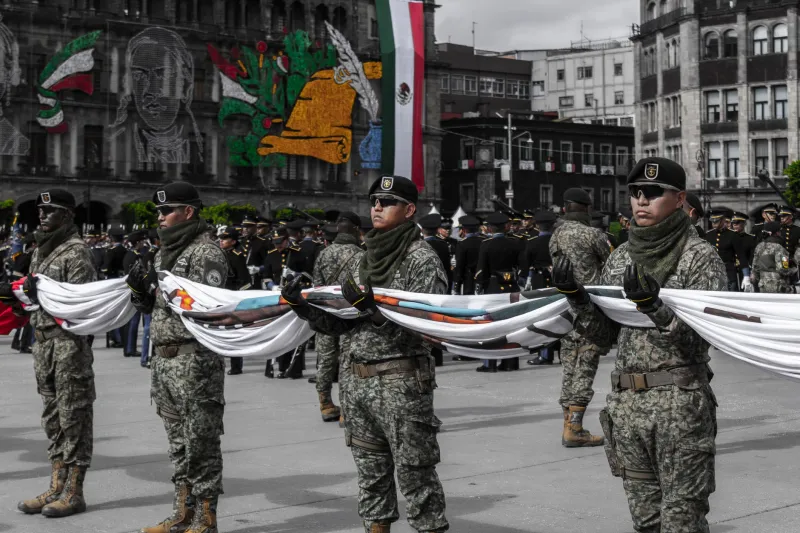
In approximately eighteen to thirty-six months, a military general whose training you partially funded at the School of the Americas will consolidate power. But that's a problem for Future Democracy. Today, we celebrate.
This has been the rough arc of American-assisted regime change for the better part of a century, and yet somehow, every time it happens, Washington expresses genuine surprise. Shocked faces. Stern statements. Strongly worded letters. The full diplomatic repertoire of a country that absolutely did not see this coming, despite having a filing cabinet full of evidence that it always comes.
The Democracy Export Business Model
Let's be honest about what "promoting democracy" has historically looked like in practice. The United States identifies a government it dislikes — usually one that has made the catastrophic error of nationalizing its own oil, or refusing to sign a trade agreement, or simply existing in a strategically inconvenient way. Washington then funds opposition groups, destabilizes the economy through sanctions, facilitates a coup or an "election" depending on how much paperwork everyone wants to do, and then stands back to watch the democratic flowers bloom.
The flowers, historically, do not bloom. What tends to grow instead is something more like a military dictatorship with a democratic veneer — a president-for-life who holds elections the way a magician holds a coin: technically present, never quite where you think it is.
Iran, 1953. Guatemala, 1954. Chile, 1973. Haiti, repeatedly, as if it were some kind of stress test. Iraq, 2003, where the entire country was demolished in search of weapons that didn't exist and democracy that, it turned out, required more than a "Mission Accomplished" banner to materialize. Libya, 2011, which went from stable-but-awful to chaotic-and-awful with a side of open-air slave markets. The list goes on long enough to require a second cup of coffee.
In each case, the stated goal was freedom. In each case, the outcome was something that required creative rebranding to describe as freedom-adjacent.
A Feature, Not a Bug
Here is the uncomfortable hypothesis that keeps showing up when you trace these patterns with any intellectual honesty: maybe this isn't incompetence.
American foreign policy establishments are staffed by people with Ivy League degrees, decades of experience, and access to intelligence networks that can tell you what a Yemeni official had for breakfast. These are not people who simply forgot to account for the possibility that removing a government might create a power vacuum. They have read about power vacuums. Some of them have written papers about power vacuums.
The more coherent explanation is that a compliant authoritarian is often more useful to American strategic interests than a genuinely independent democracy. A strongman who owes his position to Washington will sign the basing agreements. He'll keep the oil flowing at favorable prices. He won't nationalize anything or start asking uncomfortable questions about debt structures. He'll suppress the labor unions that might otherwise demand the wages that would make American corporations look elsewhere.
Democracy, real democracy, is unpredictable. Populations have the irritating habit of voting for parties that prioritize their own wellbeing over the investment portfolios of foreign multinationals. Authoritarians are more reliable business partners, in the same way that a vending machine is a more reliable lunch companion than a person with opinions.
The Rhetoric Laundering Operation
What makes this machinery so durable is the sincerity with which it's dressed up. Every intervention arrives wrapped in the language of liberation. There are speeches about the universal human yearning for freedom. There are think-tank reports with titles like "Pathways to Democratic Consolidation." There are retired generals on cable news explaining, with great gravity, that this time the conditions are right.
And then there are the years that follow, during which the conditions turn out to have been wrong, and everyone moves on to the next intervention with the institutional memory of a golden retriever encountering a garden hose.
This isn't accidental. The rhetoric serves a purpose independent of the outcome. It provides moral cover during the operation, domestic political insulation when things go sideways, and a convenient reset button when the authoritarian we installed starts making headlines for the wrong reasons. At that point, he simply becomes the next government that needs liberating, and the whole cycle restarts with fresh brochures.
What It Reveals
The pattern reveals something clarifying about the hierarchy of American foreign policy priorities. Democracy ranks somewhere below strategic access, economic interests, and regional stability — where "stability" means "a situation comfortable for American power" rather than "a situation comfortable for the people who live there."
This isn't a partisan observation. The democracy export machine has operated under Republican and Democratic administrations alike, has been cheered by neoconservatives and liberal interventionists in roughly equal measure, and has survived every election cycle with its fundamental logic intact. It is, in the truest sense, bipartisan.
The honest version of American foreign policy doctrine might read something like: We support democracy everywhere, provided it produces governments that agree with us. In cases where it doesn't, we support stability, which is a word we use for governments that agree with us but were not elected.
That's not a brochure anyone's printing. But it's the one that matches the historical record.
Another Day, Another Liberated Nation
Somewhere right now, in a country whose name American news anchors will mispronounce for three weeks before losing interest, a government is being destabilized in the name of freedom. Sanctions are biting. Opposition figures are being cultivated. Pentagon officials are having very productive meetings with very promising generals.
In a few years, there will be a transition. There will be a ceremony. There will be American officials shaking hands with the new leadership and talking about a historic moment for the people of wherever-this-is.
And then, slowly, the cameras will pan away. The strongman will do what strongmen do. The think-tank reports will pivot to calling the situation "complicated." A new threat will emerge somewhere else, requiring urgent attention and a fresh round of liberation.
Another day in the empire. Same as the last one. Freedom is always just one more regime change away.