Generosity With Strings Attached: The Unwritten Rules of American Foreign Aid
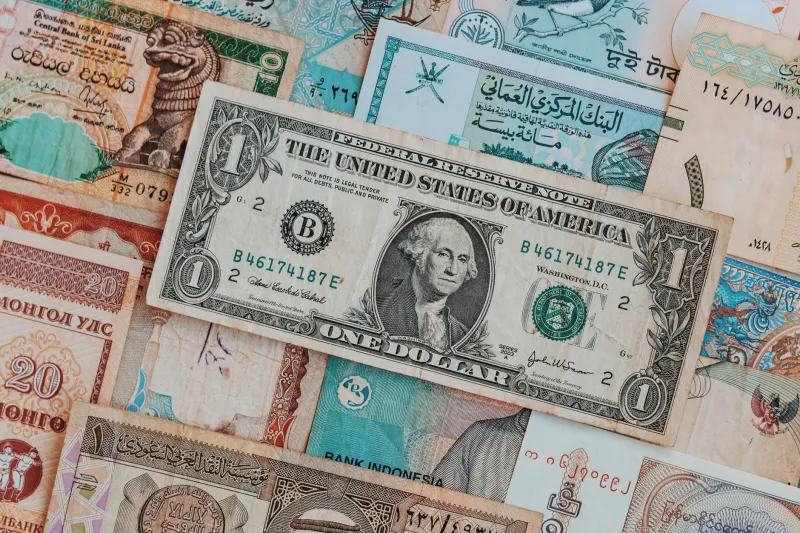
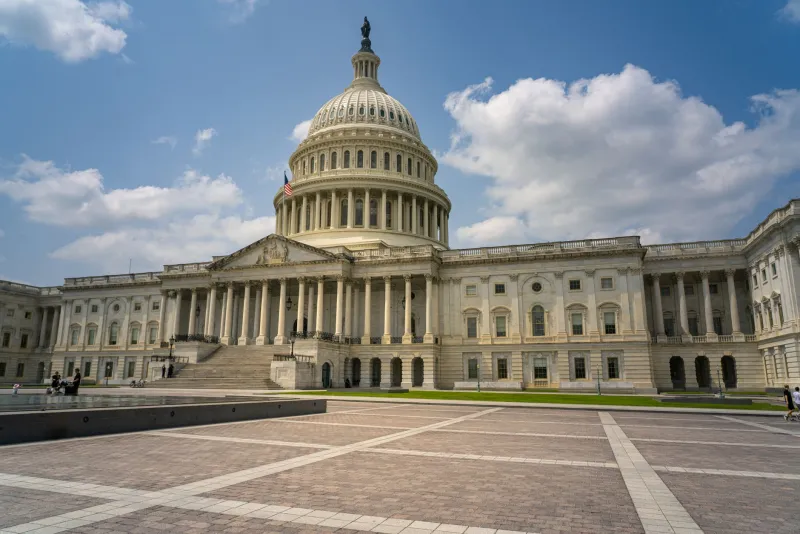
Every year, the United States government dispenses somewhere north of $50 billion in foreign assistance to countries around the globe. Press releases are drafted. Ribbon-cutting ceremonies are photographed. Senators stand in front of new water treatment facilities wearing hard hats that have never once touched a construction site. And somewhere in a marble building in Washington, D.C., a very satisfied diplomat checks a very long list.
Welcome to the friendship industrial complex — where goodwill is a product, gratitude is a currency, and the return on investment is measured not in lives improved but in votes secured, bases leased, and pipeline routes approved.
The Brochure vs. The Fine Print
On paper, American foreign aid is a noble enterprise. USAID's official mission statement reads like a motivational poster in a guidance counselor's office: ending extreme poverty, promoting resilient, democratic societies, and advancing American security and prosperity. That last part tends to get buried under the stock photos of smiling children, but rest assured, it's doing a lot of heavy lifting.
The gap between the brochure and the fine print is where the real story lives. Take the Millennium Challenge Corporation, a U.S. government agency that funds development projects in lower-income countries. Sounds lovely. The catch? Countries must first demonstrate commitment to "economic freedom" — a phrase that, in practice, often translates to opening markets to American corporations, privatizing state services, and generally arranging your national economy in a way that makes Wall Street comfortable. It's less a helping hand and more a handshake agreement written in invisible ink.
This is not a bug. It is emphatically, enthusiastically the feature.
How the Leverage Machine Works
The mechanics are elegant in their simplicity. Step one: identify a country experiencing some combination of poverty, instability, or the misfortune of sitting atop a natural resource. Step two: offer assistance. Step three: attach conditions. Step four: wait.
Those conditions can range from the relatively benign — adopting anti-corruption measures, holding elections — to the geopolitically convenient. Egypt receives approximately $1.3 billion in military aid annually, a figure that has remained remarkably stable since the Camp David Accords of 1978. Coincidence? Sure, if you also believe that the $38 billion military aid package to Israel over ten years is purely about shared democratic values and has absolutely nothing to do with regional influence, arms industry contracts, or domestic political calculations.
Recipient nations, to their credit, have learned to play the game with considerable sophistication. Pakistan spent decades accepting U.S. military assistance while simultaneously maintaining relationships with groups that U.S. officials would describe, in diplomatic cables, using words unprintable in a family publication. The Pakistanis understood something that Washington occasionally forgets: when you're the one receiving the check, you have more leverage than the transaction implies. You can always threaten to cash it with someone else — say, China — and watch the terms suddenly become more flexible.
The Quid Pro Quo Nobody Talks About at the Podium
In September 2023, when the Biden administration was navigating its aid package negotiations with various partners, the quiet conversations happening alongside the public announcements were, predictably, more illuminating than the press conferences. Voting patterns at the United Nations General Assembly correlate with aid receipts in ways that statisticians find interesting and diplomats find convenient to ignore at parties.
A 2021 study published in the journal International Organization found that countries receiving U.S. foreign aid were measurably more likely to align with American positions in UN votes — and that this alignment tended to dip when aid was reduced or threatened. You could call this evidence of shared values. You could also call it a remarkably consistent pattern that would get a college student expelled for plagiarism if they tried to pass it off as a coincidence in a political science paper.
The beauty of soft power, of course, is that nobody has to say any of this out loud. The aid arrives. The vote happens. Everyone maintains the fiction that these two events are entirely unrelated, like two strangers who keep ending up at the same coffee shop and insist they are definitely not dating.
The Recipients Who Learned to Read the Room
Not every country plays the supplicant role with equal enthusiasm. Bolivia, under Evo Morales, expelled USAID in 2013, accusing the agency of using development funding to foment political opposition. Ecuador followed. Nicaragua has had a complicated on-again, off-again relationship with American assistance that resembles nothing so much as a toxic situationship neither party can fully walk away from.
These exits are instructive. When a country expels USAID, the American response is rarely indifference. Funding for civil society organizations — many of which receive grants through the National Endowment for Democracy, an institution whose name contains the word "democracy" in the same way that "military intelligence" contains the word "intelligence" — tends to quietly continue. The apparatus is patient. It finds other channels.
Meanwhile, countries that play ball are rewarded with the kind of stability that comes from having the world's most powerful military broadly on your side. Jordan, a monarchy with a mixed human rights record, receives over $1 billion annually and enjoys a remarkably warm relationship with Washington. The lesson is not subtle: American aid does not require you to be a democracy. It requires you to be a useful one.
What Genuine Generosity Might Actually Look Like
None of this is to say that American foreign assistance never helps anyone. Vaccines reach children. Wells get dug. Schools get built. The PEPFAR program, launched under George W. Bush, has saved millions of lives in sub-Saharan Africa and represents one of the genuinely defensible chapters in American foreign policy history — even if it was accompanied by abstinence-only provisions that public health experts found baffling.
The problem isn't that aid exists. The problem is the architecture surrounding it — the assumption that generosity must always produce a return, that development is a transaction, and that the United States is entitled to shape the political and economic futures of countries it assists simply by virtue of writing the check.
Imagine, for a moment, an American foreign aid program stripped of strategic preconditions. Funding disbursed based on need rather than alignment. Development assistance designed by recipient communities rather than Washington think tanks. It's a pleasant thought experiment. It is also, in the current political climate, roughly as likely as a Pentagon budget cut.
Until that day, the friendship industrial complex hums along. The hard hats stay clean. The press releases get written. And somewhere, a very satisfied diplomat checks a very long list.
Another Day in the Empire.