Home Is Where the Humvee Is: America's Eternal Vacation on Somebody Else's Soil
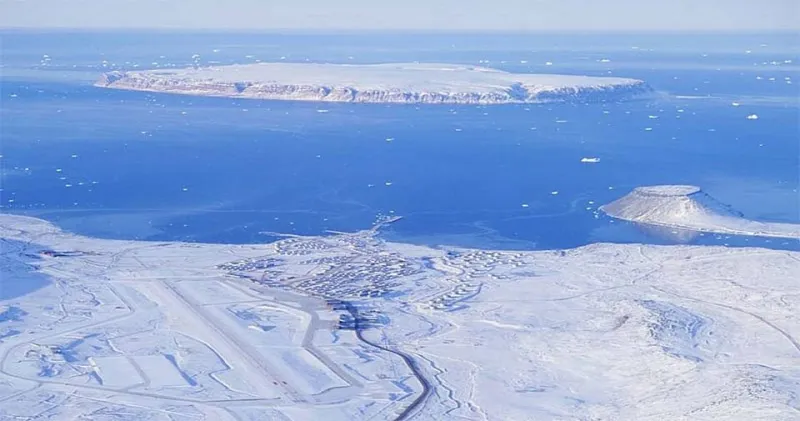
Photo: USAF, Public domain, via Wikimedia Commons
Imagine you ask a houseguest to crash on your couch for the weekend. Seventy-five years later, they've added a second story, installed a satellite dish, and started charging the neighbors rent. That, more or less, is the story of American military basing policy — a geopolitical sleepover that nobody officially agreed to extend but everyone quietly stopped questioning.
The United States currently operates somewhere in the neighborhood of 750 military installations spread across more than 80 countries. The Pentagon's official count, predictably, runs a bit lower, because counting is apparently difficult when the thing you're counting is inconvenient. Either way, no other nation on earth comes close. Britain, France, and Russia combined manage fewer than 50 foreign bases. America has that many in Japan alone.
The 'Temporary' That Time Forgot
The origin story of most of these installations follows a remarkably consistent script. A war happens — World War II, Korea, the Cold War's various anxious chapters — and the United States establishes a forward operating presence with the solemn promise that troops will be home once the situation stabilizes. The situation, as a matter of institutional habit, never quite stabilizes.
Ramstein Air Base in Germany opened in 1953. Camp Humphreys in South Korea has been continuously occupied since 1919, though the Americans took over the deed in 1950 and have been renovating ever since — most recently to the tune of $10.7 billion, making it the most expensive American overseas base ever constructed. The Cold War ended in 1991. The base got a brand new PGA-quality golf course in 2016.
This is not accidental. The machinery that keeps these installations running is a masterpiece of self-perpetuating bureaucracy. Defense contractors build the facilities, then secure long-term service contracts to maintain them. Local economies in host countries become structurally dependent on base employment and spending. American lawmakers with contractors or military families in their districts develop a religious devotion to keeping the lights on overseas. And the Pentagon, bless its heart, has never encountered a base it didn't feel could use a modest expansion.
The Justification Carousel
What makes the permanent base paradox truly elegant is the flexibility of its rationale. These installations don't need a consistent reason to exist — they just need a reason, and the world, helpfully, never runs out of those.
In the 1950s, it was containing Soviet communism. In the 1990s, it was maintaining post-Cold War stability — a phrase that, if you squint, means almost nothing but sounds enormously responsible. After September 11, it became counterterrorism, which conveniently required bases in Central Asia, the Horn of Africa, and assorted corners of the Middle East that had previously been considered strategically optional. Now it's China. It's always, eventually, China.
The beauty of this carousel is that each new justification doesn't replace the old infrastructure — it supplements it. Bases built to deter the Soviets were repurposed to fight al-Qaeda, then reconfigured to project power into the Pacific. The physical plant remains. Only the PowerPoint presentation changes.
What It Actually Costs
The United States spends somewhere between $55 billion and $100 billion annually maintaining its overseas military presence, depending on whose accounting you trust and how creatively the Pentagon is feeling about line items that quarter. The range is wide because the Defense Department has historically treated financial transparency the way a raccoon treats a locked garbage can — as a challenge, not a deterrent.
American taxpayers fund not just the bases themselves but the elaborate diplomatic infrastructure required to maintain them: Status of Forces Agreements, or SOFAs, which are essentially legal frameworks ensuring that American service members enjoy a degree of jurisdictional immunity in host countries. In practice, this means that when things go wrong — and occasionally, things go quite wrong — the legal consequences tend to be negotiated rather than applied. Host country populations, particularly in places like Okinawa, have been pointing this out loudly for decades. Washington nods sympathetically and submits a request for additional runway capacity.
Some host nations do contribute to basing costs — Japan and South Korea, under sustained American pressure, pay billions annually in what are diplomatically called "host nation support" payments and less diplomatically called what happens when your landlord has a carrier strike group. The Trump administration, in a moment of unusual candor, reportedly referred to these arrangements as a protection racket during negotiations. This was considered gauche. The racket continued.
The Exit Problem
Occasionally, the United States does leave a base. The closure of Clark Air Base in the Philippines in 1992 — accelerated somewhat by the inconvenient eruption of Mount Pinatubo — was held up as evidence that America could, in fact, pack its bags when circumstances required. Sixteen years later, the U.S. quietly negotiated access to multiple Philippine bases under a rotating presence framework. The bags were never fully unpacked.
The deeper problem with closing bases is that the Pentagon has successfully conflated physical presence with strategic credibility. The argument, repeated with the conviction of a catechism, is that allies need to see American boots on their soil to believe in American commitments. Remove the boots, the thinking goes, and the entire architecture of deterrence wobbles. This is a convenient argument if you are, say, a defense contractor with a $2 billion facilities management contract, but it is also genuinely believed by a substantial portion of the foreign policy establishment — which tells you something about how thoroughly the incentive structures have colonized the strategic imagination.
Another Day, Another Fortress
There is something almost poignant about the gap between the rhetoric and the reality. American politicians speak regularly about fiscal responsibility, the need to trim government waste, the importance of not saddling future generations with unsustainable costs. Then they vote, with near-unanimous bipartisan enthusiasm, to fund a global network of military real estate that would make a Roman emperor blush.
The bases persist not because anyone sat down and decided, in cold strategic logic, that 750 installations across 80 countries represents the optimal security posture for a constitutional republic. They persist because the system that built them also built the political, economic, and bureaucratic incentives to maintain them indefinitely. Each base is a node in a network of contracts, careers, alliances, and assumptions so thoroughly interwoven that questioning any single installation feels, to the people inside the system, like pulling a thread that might unravel everything.
Which is, of course, exactly what they said about the last empire that tried this.
The couch, for now, remains occupied. The second story is under construction. And somewhere on a base in Bahrain, a Subway sandwich franchise is reportedly doing quite well.