Saving the World, Billing by the Hour: The Booming Business of American Altruism
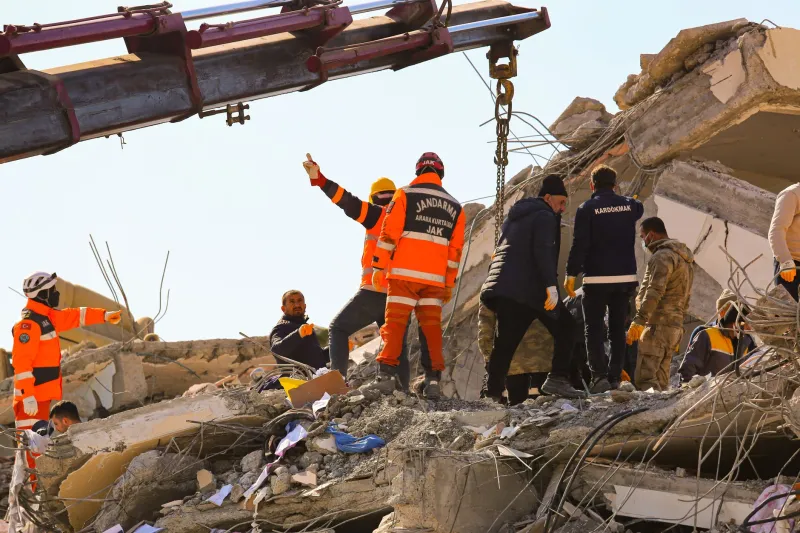
When the earthquake hits, when the floodwaters rise, when the famine spreads across a sun-scorched plain, America does not hesitate. Within hours, the press releases are drafted. Within days, the cargo planes are loaded. Within weeks, the invoices are filed. Because nothing says we care quite like a cost-plus government contract with a six-figure project management fee buried somewhere in paragraph fourteen.
Welcome to the Humanitarian-Industrial Complex — a sprawling ecosystem of NGOs, Beltway contractors, USAID liaisons, and assorted do-gooders-for-hire who have quietly transformed the business of global suffering into one of Washington's more recession-proof industries. The disasters change. The beneficiaries rotate. The American firms collecting reconstruction dollars remain remarkably consistent.
The Invisible Hand of the Helping Hand
Let's be precise about what we're describing, because the participants in this system are deeply committed to not describing it themselves. The Humanitarian-Industrial Complex is not a conspiracy. Nobody sits in a mahogany-paneled room and decides which catastrophe to monetize next. It's far more elegant than that. It is, in the truest sense, a market — one with powerful incentive structures that reliably produce the same outcomes regardless of anyone's intentions.
Here is how the machine works: A crisis erupts somewhere strategically inconvenient or, better yet, somewhere strategically convenient. Congress appropriates emergency funds. USAID issues solicitations. A handful of large American contractors — your Chenierres, your Bechtelian behemoths, your alphabet-soup consulting firms with offices on K Street — submit proposals. Smaller NGOs, many of them genuinely idealistic, compete for subcontracts. The prime contractor takes its cut for "coordination and oversight." The subcontractors take their cut for "implementation." And somewhere at the end of this very long billing chain, aid reaches people in need — often reduced, often delayed, occasionally in a form those people didn't particularly ask for.
The earthquake in Haiti after 2010 remains the canonical case study. Billions of dollars flowed in. American contractors dominated the reconstruction landscape. Ten years later, independent assessments found that the majority of USAID contracts had gone to firms headquartered in the Washington, D.C. area. Haitian organizations received a fraction of a fraction. The country remained, by virtually every measurable standard, worse off than the pre-earthquake projections suggested it should be. But several American firms had excellent fiscal years.
Strategic Compassion and the Art of the Dependency Loop
It would be unfair — and frankly too easy — to frame this purely as corruption. The more sophisticated critique is about design. American foreign aid has never been, in its official conception, purely philanthropic. USAID's own foundational documents are admirably honest about this: aid is an instrument of foreign policy. The question is what happens when the foreign policy goals and the humanitarian goals diverge, which they do, constantly, with remarkable predictability.
Consider food aid, an area where the United States spent decades shipping surplus American agricultural commodities overseas rather than purchasing food locally in affected regions. This approach was more expensive, slower, and demonstrably less effective at addressing hunger. It was, however, excellent for American agribusiness and American shipping companies, both of which lobbied vigorously to preserve it. The people being fed were almost incidental to the transaction.
Or consider the dependency loops that long-term aid relationships tend to create. When a country's health infrastructure is built, staffed, and maintained by American NGOs operating on five-year grant cycles, that country does not develop a health infrastructure — it develops a relationship with American NGOs. When those grants expire or redirect, the infrastructure frequently collapses. This is not a bug in the system. A country that has built genuine institutional capacity has less need for American assistance. A country that remains dependent continues to provide a market, a foothold, and a source of leverage.
The Subcontractor Archipelago
One of the more durable myths about American humanitarian work is that it is primarily carried out by scrappy idealists with Peace Corps energy and a passion for community development. Some of it is. But the money — the serious, congressional-appropriation money — flows through a remarkably consolidated network of large contractors for whom humanitarian work is simply another government services vertical.
These firms are not evil. They are, in the most literal sense, doing exactly what their shareholders and government clients expect of them. They are efficient at winning contracts, competent at producing reports, and skilled at managing the optics of American generosity. Whether the wells get built, whether the schools stay open after the project period ends, whether the communities served have any meaningful input into what's being done on their behalf — these questions tend to receive less rigorous attention, because they are harder to measure and nobody is specifically paying for them.
The result is an industry that has perfected the appearance of effectiveness. Glossy impact reports. Carefully selected success stories. Photographs of smiling children that travel efficiently through congressional briefing packets. Meanwhile, independent evaluations — the ones that don't get widely circulated — paint a considerably more complicated picture.
What Good Actually Looks Like (And Why It's Bad for Business)
Here is the uncomfortable empirical truth lurking beneath all the press releases: the aid approaches that demonstrably work best tend to be the ones that most directly undermine the Humanitarian-Industrial Complex's business model.
Direct cash transfers to affected populations, for instance, consistently outperform in-kind aid delivery across multiple metrics — cost efficiency, recipient satisfaction, economic multiplier effects. They also require minimal American contractor involvement. Unsurprisingly, they remain a relatively small slice of the overall aid portfolio.
Local procurement — buying food, materials, and services from within affected regions — is faster, cheaper, and builds local economic capacity. It is also considerably less lucrative for American firms. Progress on this front has been slow and bitterly contested.
Community-led development, in which affected populations actually design and direct the interventions meant to help them, produces more durable outcomes than externally imposed programs. It is also deeply inconvenient for organizations that need to demonstrate deliverables to Washington funders on a predetermined timeline.
The pattern is consistent enough to suggest a structural conclusion: the Humanitarian-Industrial Complex is not primarily optimized for helping people. It is optimized for sustaining itself, satisfying its funders, and advancing the geopolitical interests of the country that writes the checks. Helping people is what happens when those priorities don't conflict — which, to be fair, is sometimes.
Empire With a Logo
None of this is to say that American humanitarian work produces no good. It does, regularly, in measurable ways. People receive food, medicine, shelter, and education through programs funded by American taxpayers, and that is not nothing. The workers in the field — the local staff, the idealistic young Americans sleeping in difficult conditions far from home — are often genuinely trying.
But the system that deploys them is not a charity. It is an extension of American power, dressed in the language of compassion, operating according to incentives that reliably prioritize American interests, American firms, and American influence over the stated goal of reducing human suffering. Every disaster is, among other things, an opportunity — for contracts, for positioning, for the gentle accumulation of leverage over grateful governments.
Another day in the empire. Another cargo plane on the tarmac. Another invoice in the mail.
The branding is impeccable.